How to Drive Safely in the Faroe Islands’ Fog, Rain & Wind

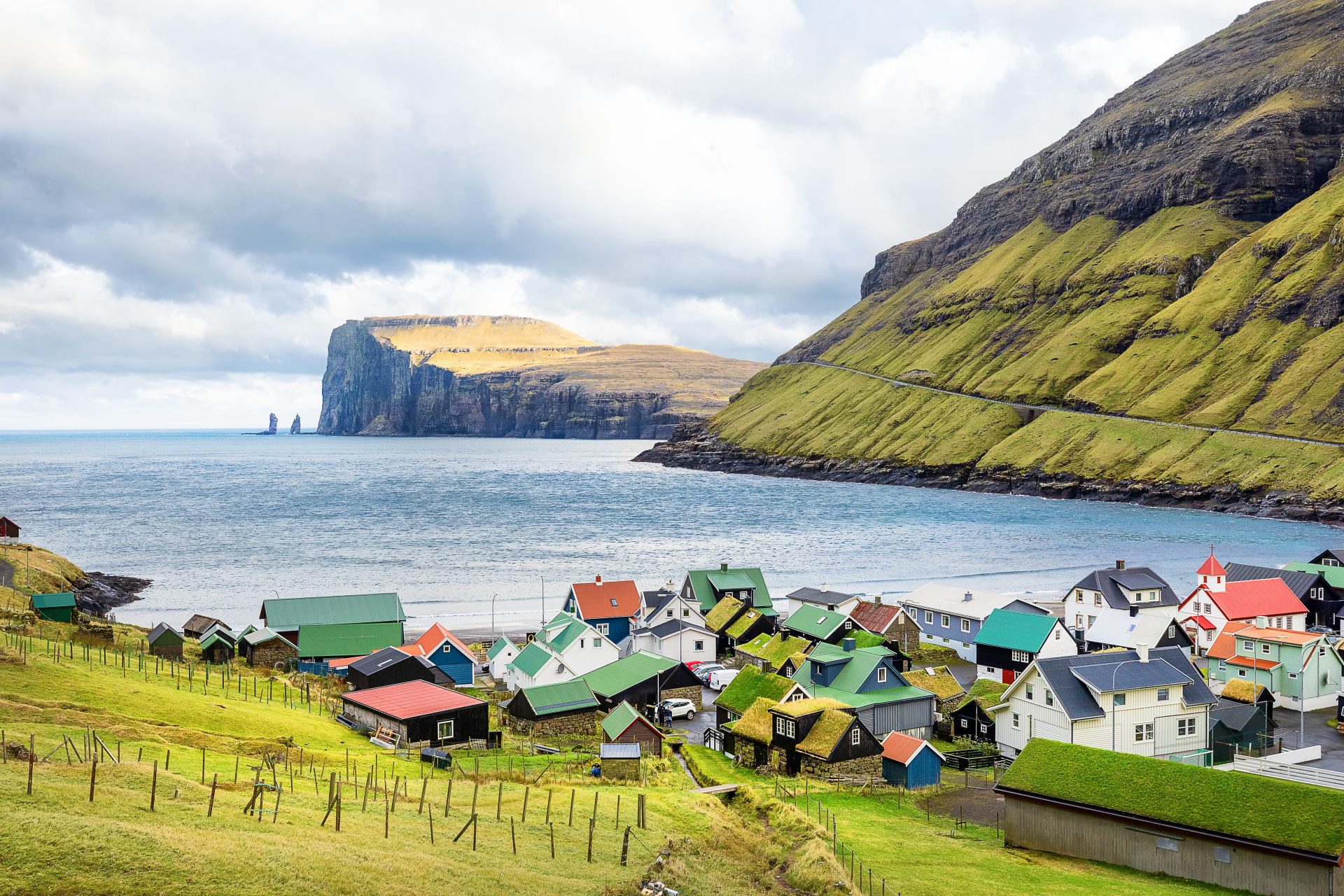
Driving in the Faroe Islands is safe and enjoyable when you adapt to changing conditions. Use low-beam headlights in fog, slow down in rain, and grip the wheel firmly during strong winds. Roads are well-maintained, but the weather changes quickly. With careful driving (and a well-planned self-drive route), you can explore every island confidently in any conditions.
Read more below for practical tips on handling fog, rain, and wind while driving through the Faroe Islands, plus local advice to make every journey safe and enjoyable.
The Beauty of Faroese Weather
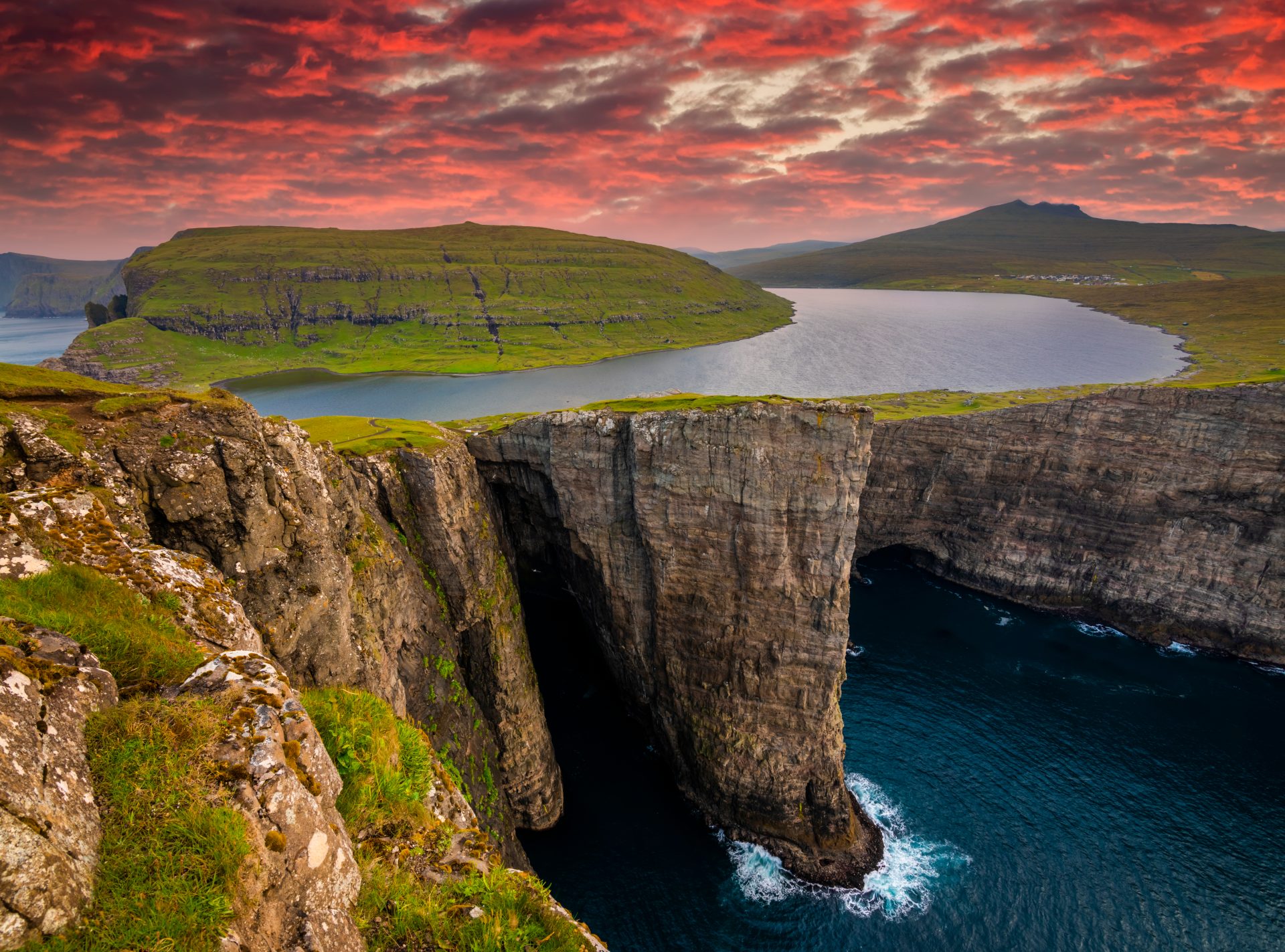
The Faroes lie in the North Atlantic between Scotland and Iceland, directly in the path of the Gulf Stream and Atlantic storm systems. As a result, the islands enjoy mild temperatures year-round, typically between 2 °C in winter and 12 °C in summer, but they are rarely calm. Wind, mist, and drizzle define the climate far more than temperature.
Locals often joke, “If you don’t like the weather, wait five minutes.” It’s true: You can drive through four seasons before reaching the next village.
Legal Must-Dos for Drivers:
- Headlights (dipped) on at all times, and it’s required by law
- Speed limits: 50 km/h in towns, 80 km/h outside (unless signed)
- Seatbelts are mandatory for everyone
- Hands-free only when using a phone
- No off-road driving, as it’s illegal and harms fragile terrain
General Principles for Driving in Any Weather:
- Slow down. Speeds above 70 km/h are rarely safe in poor visibility or crosswinds.
- Use headlights (low beam) at all times.
- Keep a greater following distance, at least double your normal spacing.
- Avoid sudden braking or acceleration. Wet or mossy surfaces can be slippery.
- Plan extra time. The difference between an easy and stressful drive is often just 30 unhurried minutes.
With these habits, most travelers find driving in Faroese weather perfectly manageable.
Driving in Fog
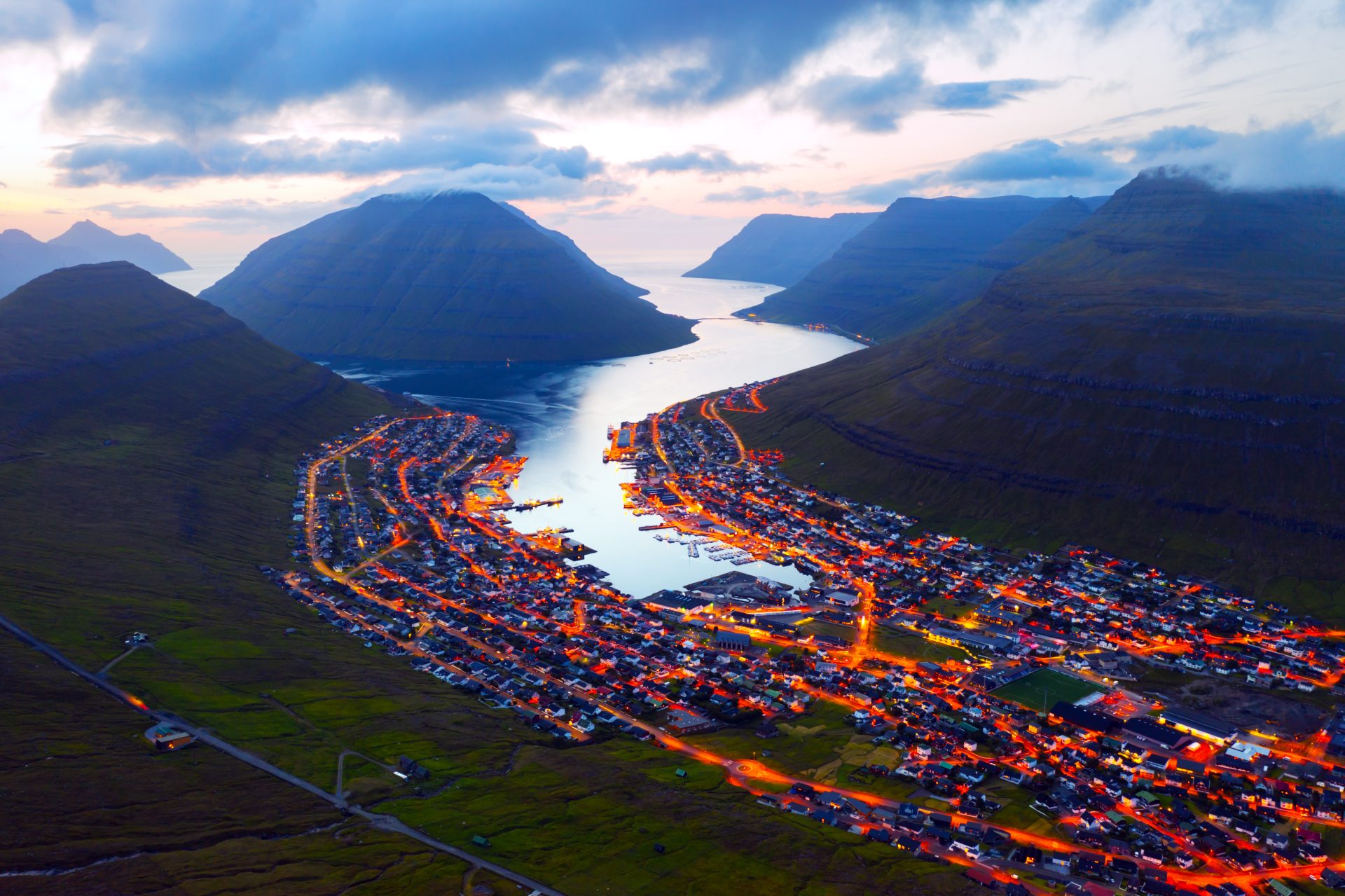
Fog, or low cloud, is one of the most common challenges on mountain passes or coastal routes, especially in the spring and autumn. It can appear suddenly, reducing visibility to a few meters, and then lift just as quickly.
What Causes Fog Here
Warm, moist air from the Gulf Stream meets cold mountain air, creating mist that clings to slopes and tunnels. The fog often waves, thickening and thinning as the wind shifts.
Safety Tips:
- Use low-beam headlights and fog lights, never high beams, as they reflect off fog.
- Reduce speed and follow the edge line or reflective posts.
- Avoid overtaking under any circumstances.
- Open a window slightly to hear better approaching traffic, especially in tunnels.
- Never stop on the carriageway. Pull into a lay-by if visibility is near zero.
Local Insight
Fog thickens at higher elevations and clears near sea level. If the road climbs into cloud, continue steadily; descending often restores visibility. Locals use short, gentle horn taps on blind corners to signal presence. 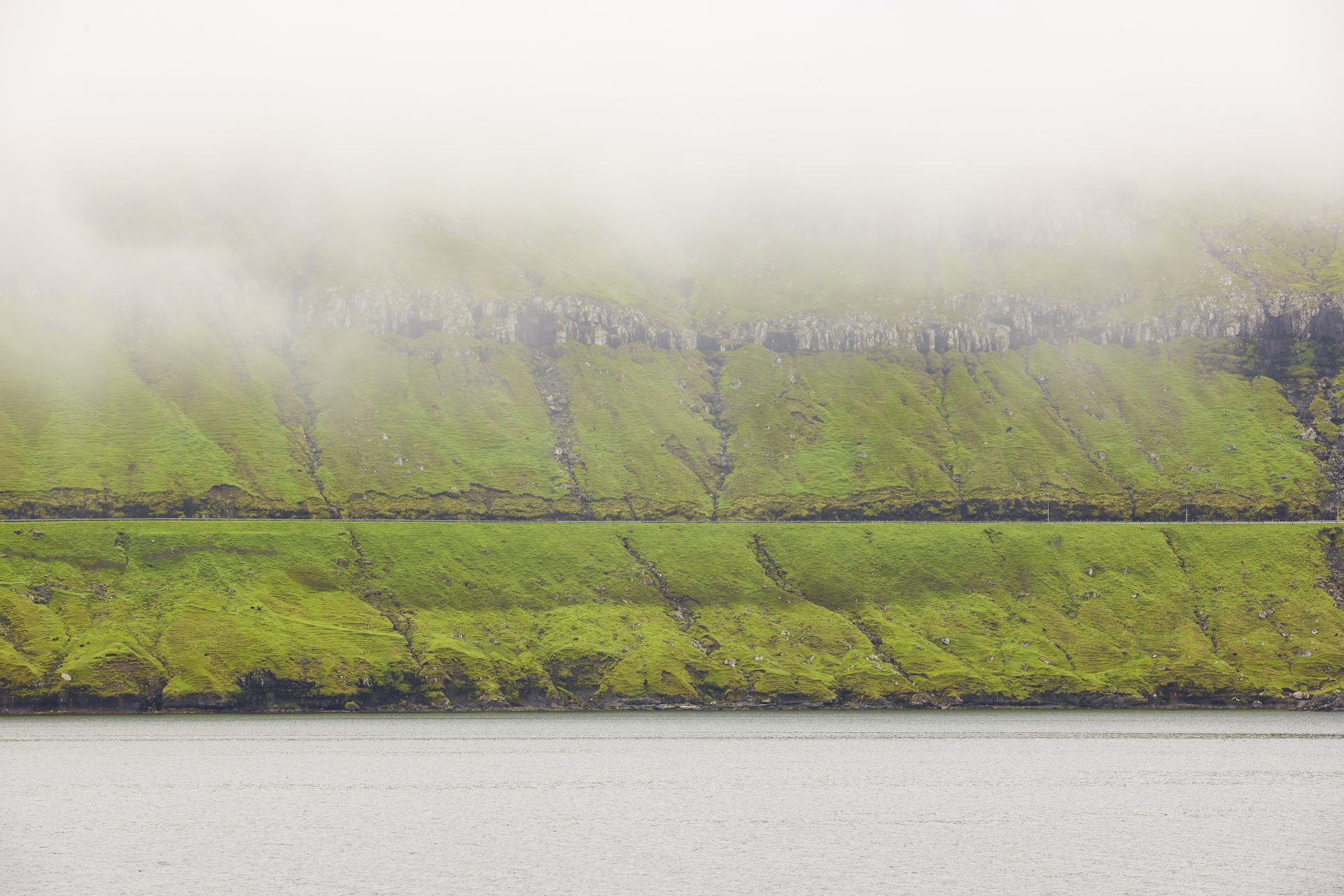
Driving in Rain
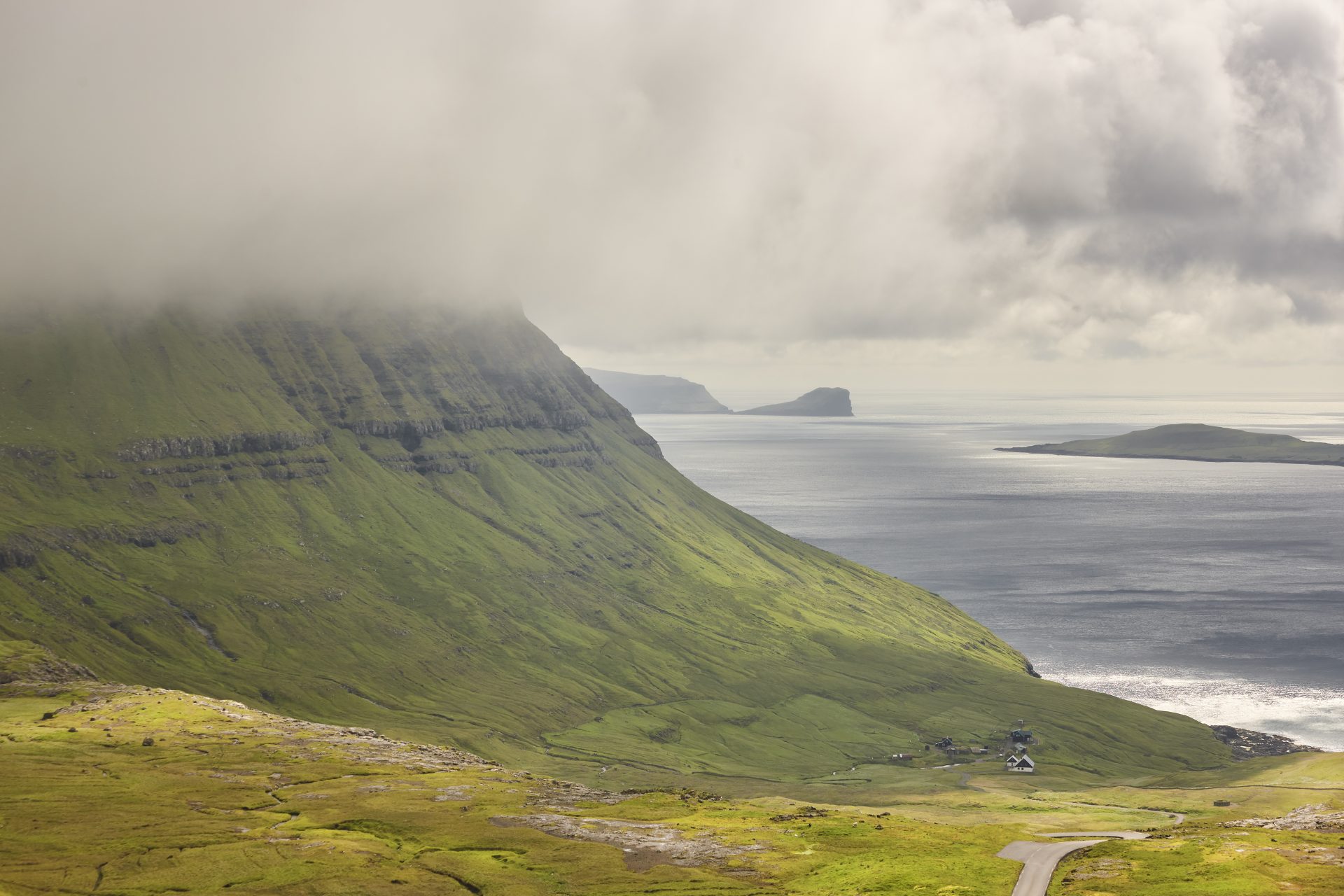
Rain is a near-constant companion in the Faroes. While downpours are rare, drizzle and showers occur on most days. Because the islands are mountainous, rainwater often runs across roads, carrying grit or moss that can make surfaces slick.
Safety Tips:
- Keep headlights on, as visibility drops even in light drizzle.
- Use wipers early and adjust speed gradually to avoid hydroplaning.
- Avoid deep puddles; they may hide dips or potholes.
- Increase following distance; braking distances double on wet asphalt.
- Be cautious on mossy verges near viewpoints; they’re slippery when wet.
Local Habits
Drivers often keep a microfiber cloth handy to wipe interior condensation, which is common in humid conditions.
Driving in Strong Winds
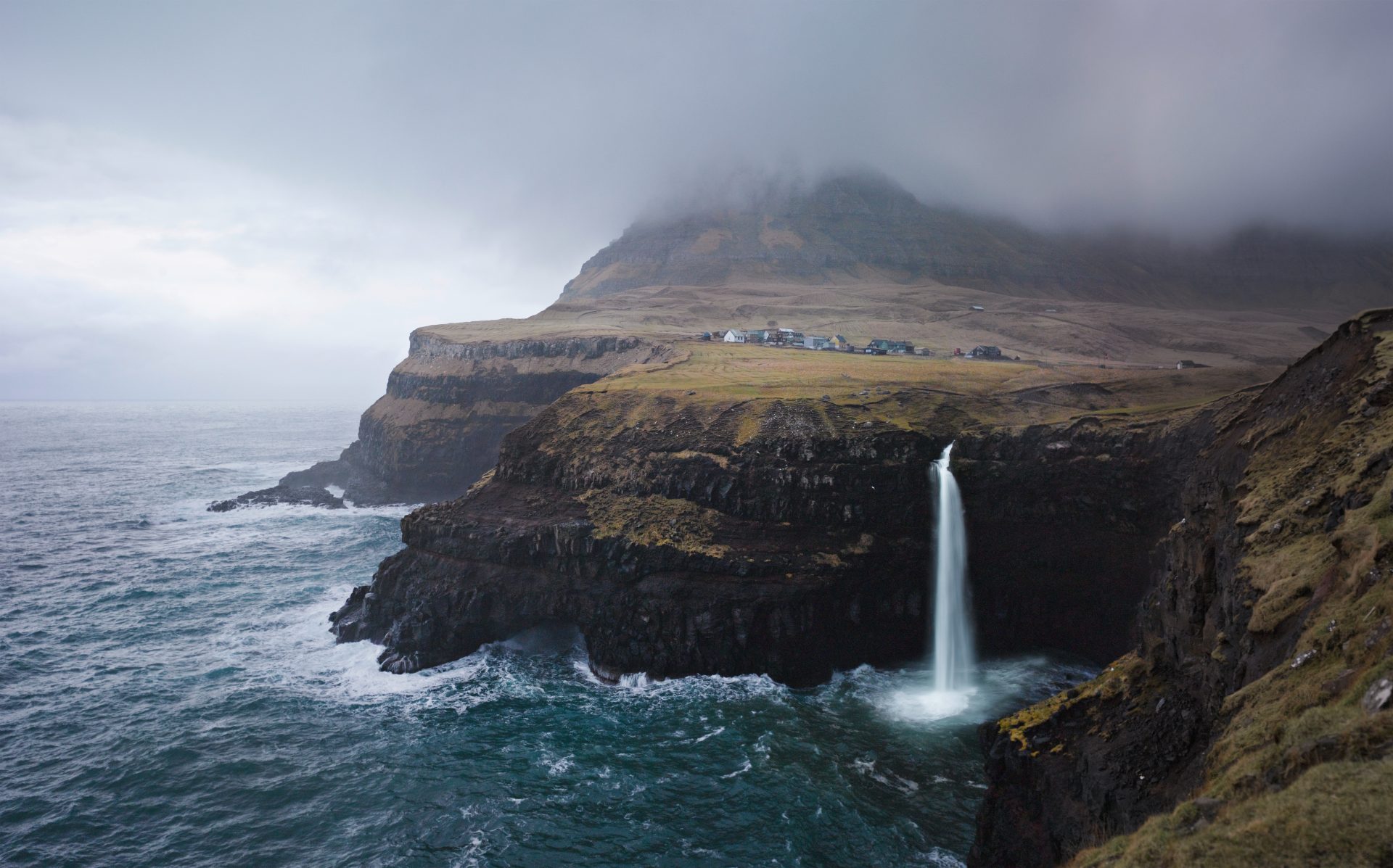
The Faroes are defined by wind. Gusts can exceed 20 m/s (≈45 mph) on exposed ridges or bridges, especially from October to March.
Check Warnings Before You Drive:
- The Faroese Meteorological Office (FMO) issues Yellow, Orange, and Red alerts.
- Avoid exposed bridges, causeways, and high passes when winds are elevated.
- Check live Landsverk webcams to see road conditions.
Safety Tips:
- Grip the wheel firmly with both hands.
- Reduce speed significantly on open roads.
- Avoid overtaking large vehicles or driving close to cliffs.
- If gusts feel uncontrollable, stop at a sheltered lay-by and wait.
- Hold doors securely when entering or exiting; gusts can wrench them open.
- Campervans: Park facing into the wind; avoid overnighting on exposed ridges.
One-Lane Tunnels: How to Navigate
Older single-lane tunnels include passing bays roughly every 100 m. If the bay is on your right, you yield. Enter slowly and be ready to reverse to the nearest bay. Buses and trucks generally have priority because the bays are too small for them.
Combined Conditions: Fog, Rain, and Wind Together
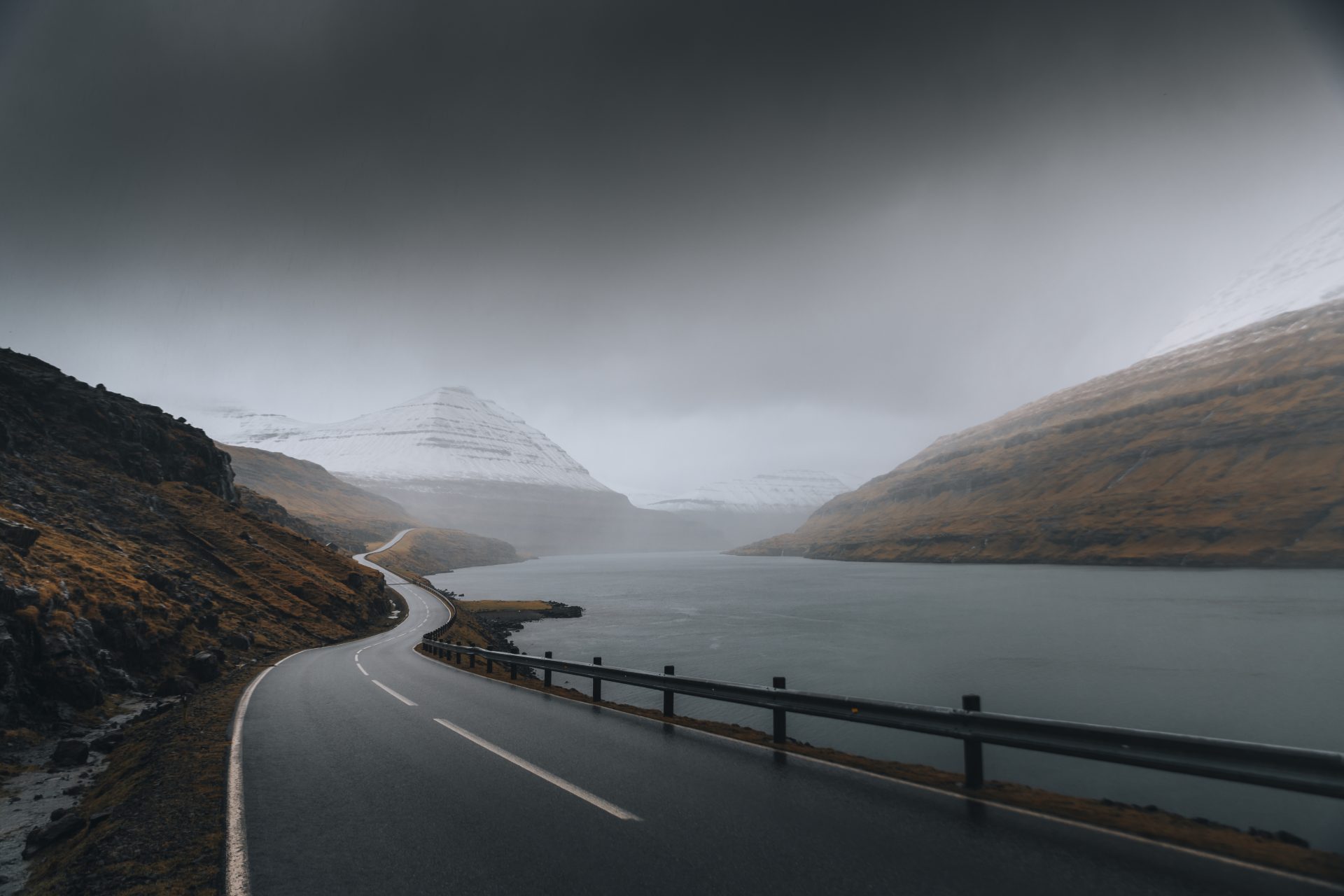
The Faroese weather often layers its challenges. When fog and drizzle arrive with crosswinds:
- Slow to 40–50 km/h if needed.
- Use low-beam lights only, as high beams worsen glare.
- Keep windows slightly open to prevent interior fogging.
- Focus on reflective posts for guidance.
- Stay relaxed, locals drive through such weather daily.
- If conditions deteriorate, find a café, viewpoint shelter, or car park and wait. The weather rarely stays severe for more than 20–30 minutes.
Vehicle Preparation Before Bad Weather
- Tyres: At least 3 mm tread depth. Check inflation.
- Lights and Wipers: Test all lights. Wipers should be streak-free.
- Fuel: Keep the tank above half. Remote stations may close early.
- Emergency Kit: Reflective vest, torch, phone charger, map, and water.
- Mobile coverage is excellent, but may fade in tunnels or valleys.
Seasonal Patterns
The Faroe Islands can feel like four seasons in a single day, but each time of year brings its own rhythm on the road. Understanding how weather patterns change by season helps you plan safer drives, choose the best routes, and know what to expect from fog, rain, and wind before you set out.
Spring (Apr–May): Frequent fog, light rain.
Local advice: Take extra care on mountain passes.
Summer (Jun–Aug): Calm but changeable showers.
Local advice: Watch for low cloud on cliffs.
Autumn (Sep–Oct): Strong winds, bright skies between storms.
Local advice: Check the Faroese Meteorological Office daily, before driving, for alerts.
Winter (Nov–Mar): Frequent gales, limited daylight.
Local advice: Stick to main roads if you are inexperienced.
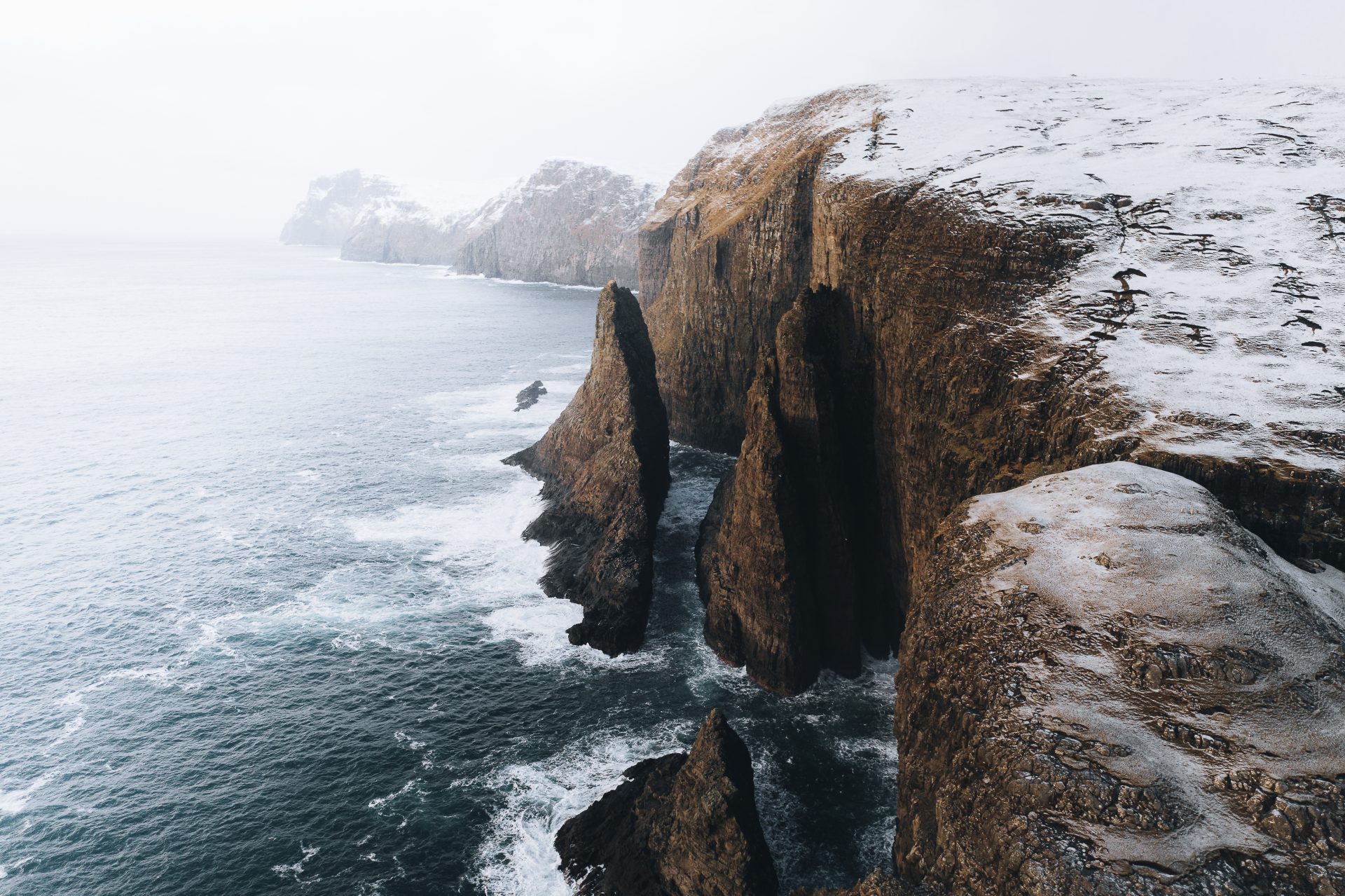
Even in winter, snow is rare and melts quickly, but black ice can form overnight on high passes. Roads are salted promptly, yet early mornings demand caution.
When to Stop Driving
Locals say: “If you’re fighting the weather, the weather wins.” If you’re gripping the wheel tightly or straining to see beyond the bonnet, pull over safely and wait. Good places to pause include village car parks, fuel stations, and lay-bys.
Never stop on bridges, inside tunnels, or at tunnel mouths. If warnings are Orange or Red, postpone non-essential travel.
Photography and Safety
Stormy weather creates stunning images, but safety comes first. Avoid stepping out on narrow roads or cliff edges, as gusts can be stronger than they look. Park entirely off the road and use barriers or stay inside the car.
Local Perspective: Driving as Shared Responsibility
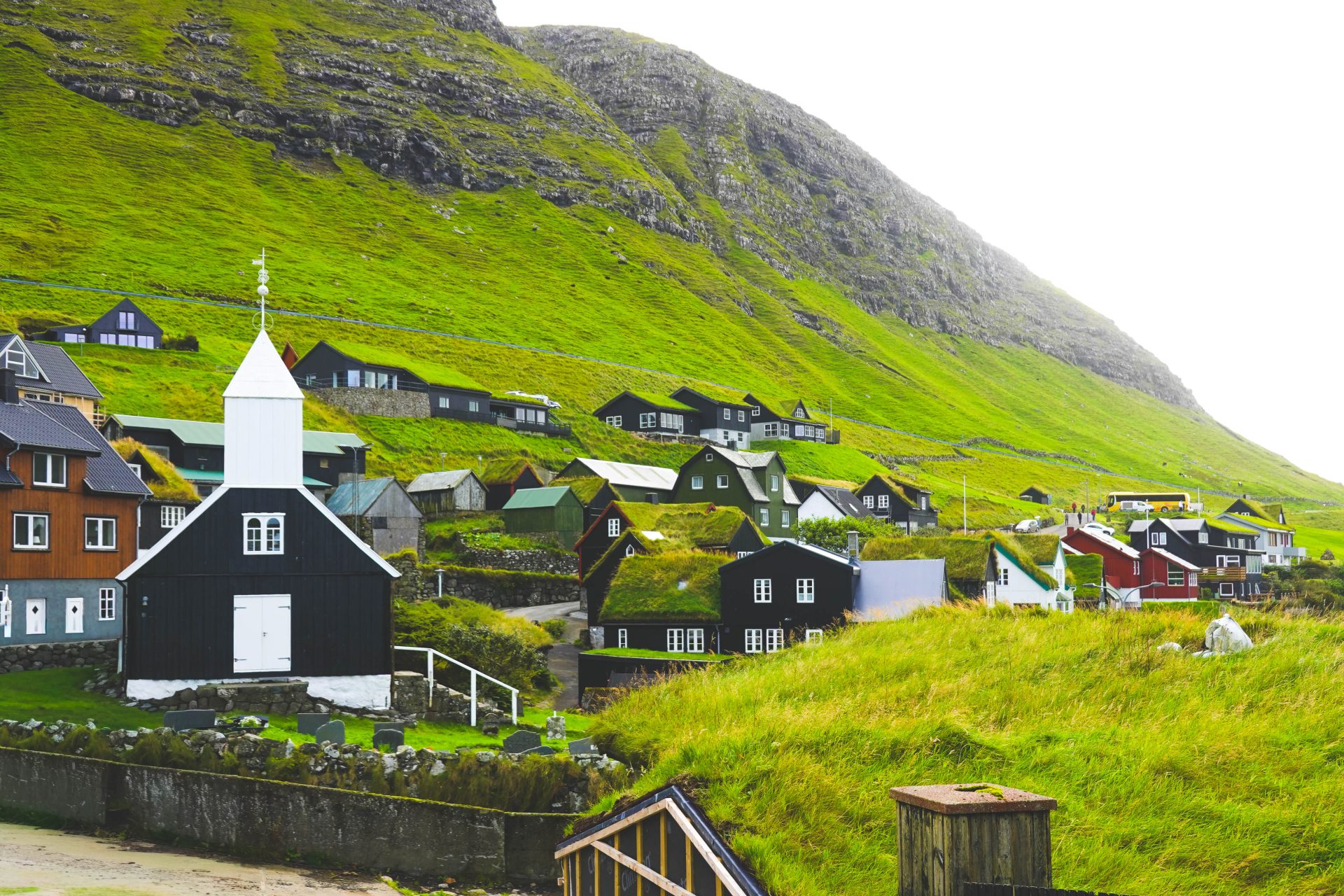
Faroese residents drive calmly and courteously through the same fog and wind that challenge visitors daily. They often slow or stop to help others at tunnel entrances. Returning that respect keeps the cooperative spirit that defines Faroese roads alive.
As one Tórshavn driver put it: “The weather changes fast. What doesn’t change is how we treat each other on the road.”
FAQ
Do I need special tires for Faroese weather?
No. Rental cars are equipped with all-season or winter tires suitable for local conditions.
Are road closures common?
Rare, but exposed links can close briefly during strong wind warnings. Check the Landsverk website for updates.
Can I drive through fog at night?
Yes, at low speeds with fog lights. Avoid mountain roads after dark if possible.
Who has priority in one-lane tunnels?
The side with the turnout yields; buses and trucks usually have practical priority.
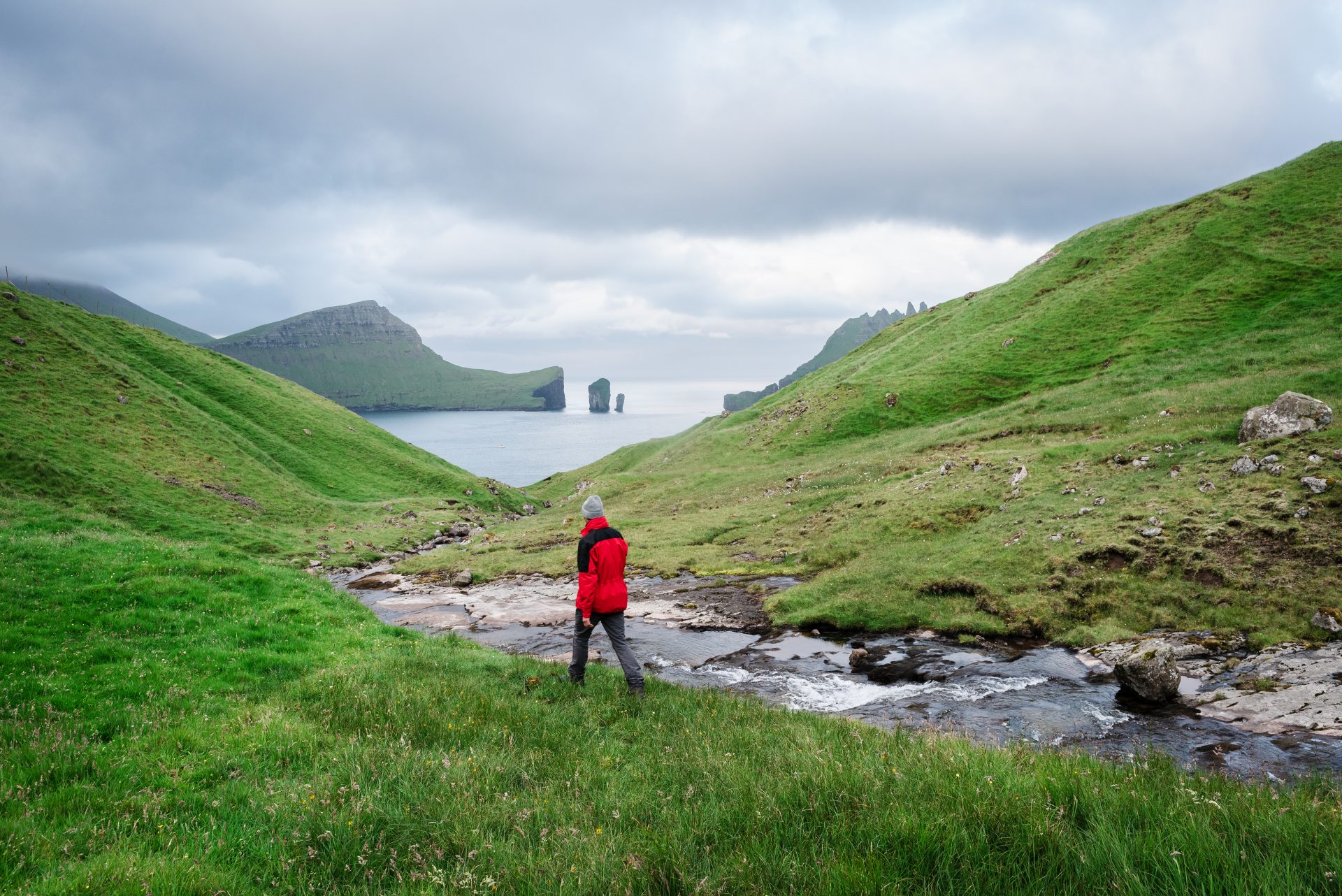
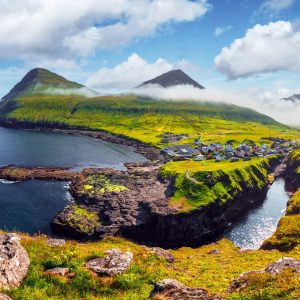
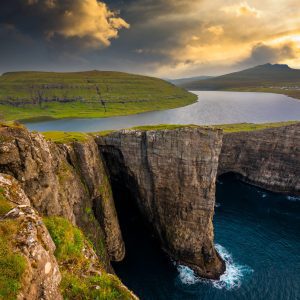
Driving through fog, rain, and wind in the Faroe Islands demands patience but rewards you with moments of haunting beauty: mist curling around cliffs, rainbows breaking over fjords, and light shifting across the sea.
With steady hands and respect for nature’s rhythm, these conditions become part of the journey, not obstacles.
In the Faroes, the weather is not your enemy. It’s a living presence that shapes every mile. Adapt, drive gently, and you’ll discover the quiet heart of these remarkable islands.